
Szeptem™
iOS and iPadOS 26.0+
In a whisper.
A voice journal you speak instead of type. Say what's on your mind, and it's transcribed into a private, searchable entry, right there on your phone. Szeptem is Polish for “in a whisper.”
- Transcribed on-device
- Stored on your phone
- Semantic search, on-device
- Backups are encrypted
Coming soon — not yet live on the App Store.
Want early access? Email [email protected] to join the beta.
What's inside
-
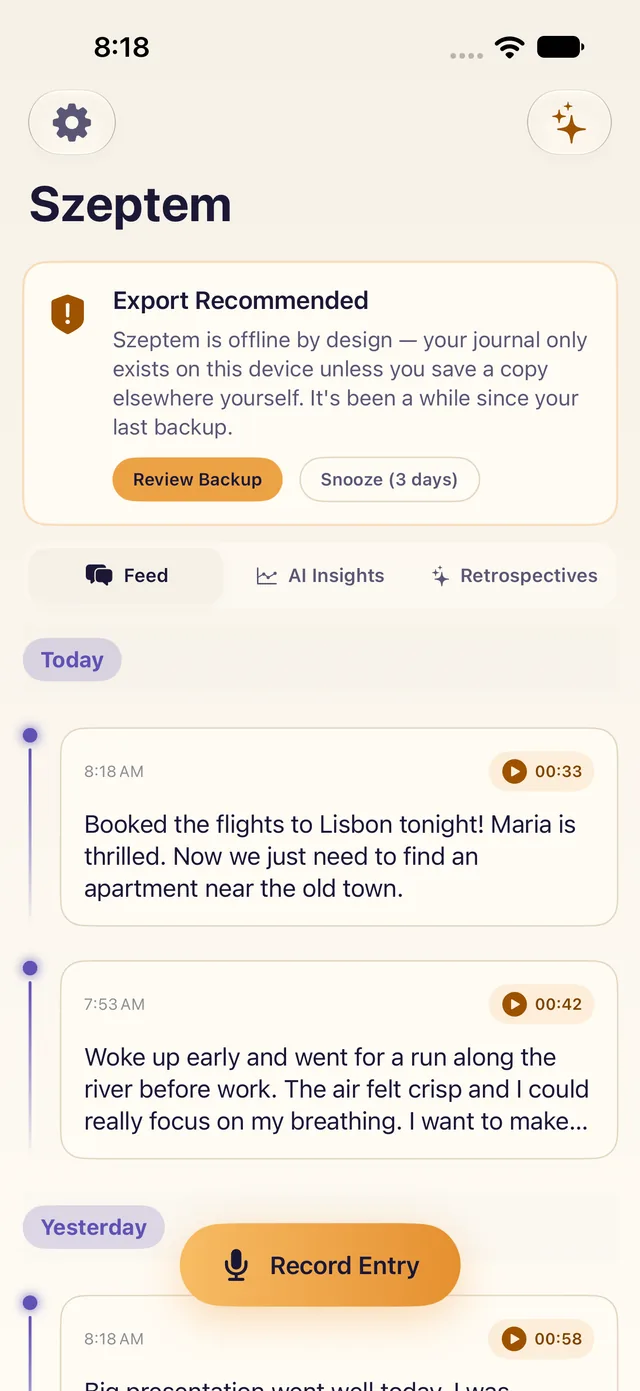
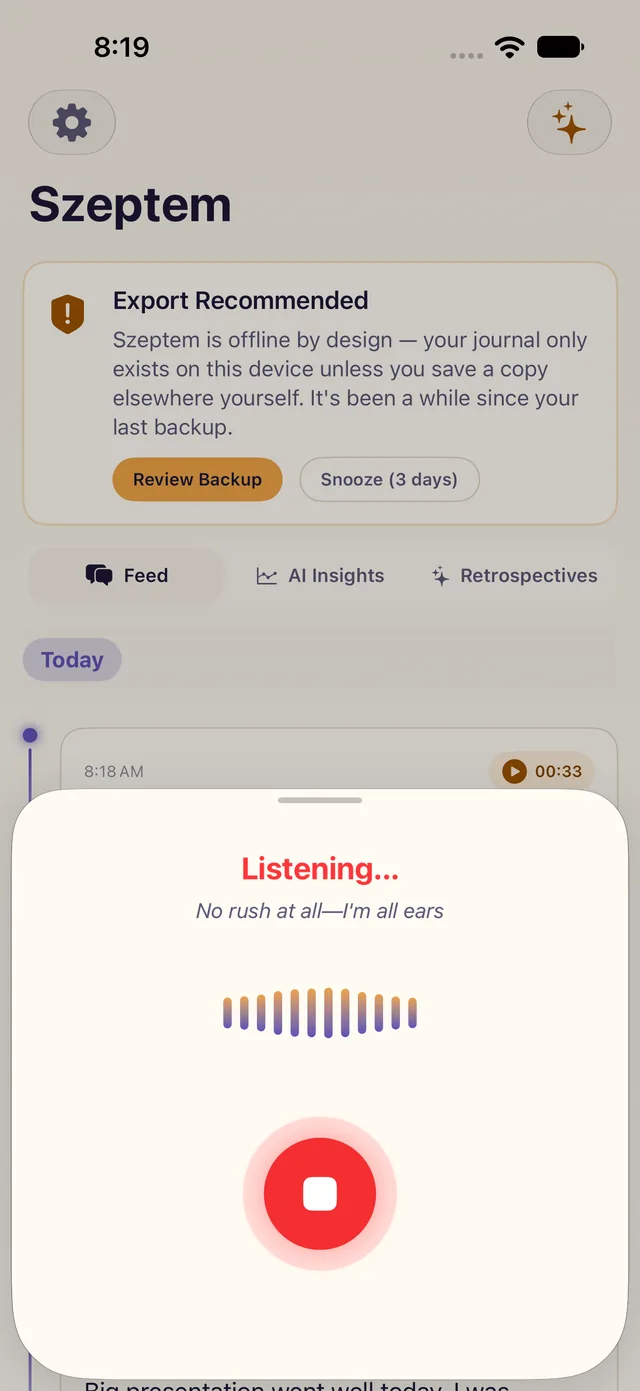
On-device transcription
Recordings are transcribed locally with whisper.cpp, so your voice never has to leave your phone to become text.
-
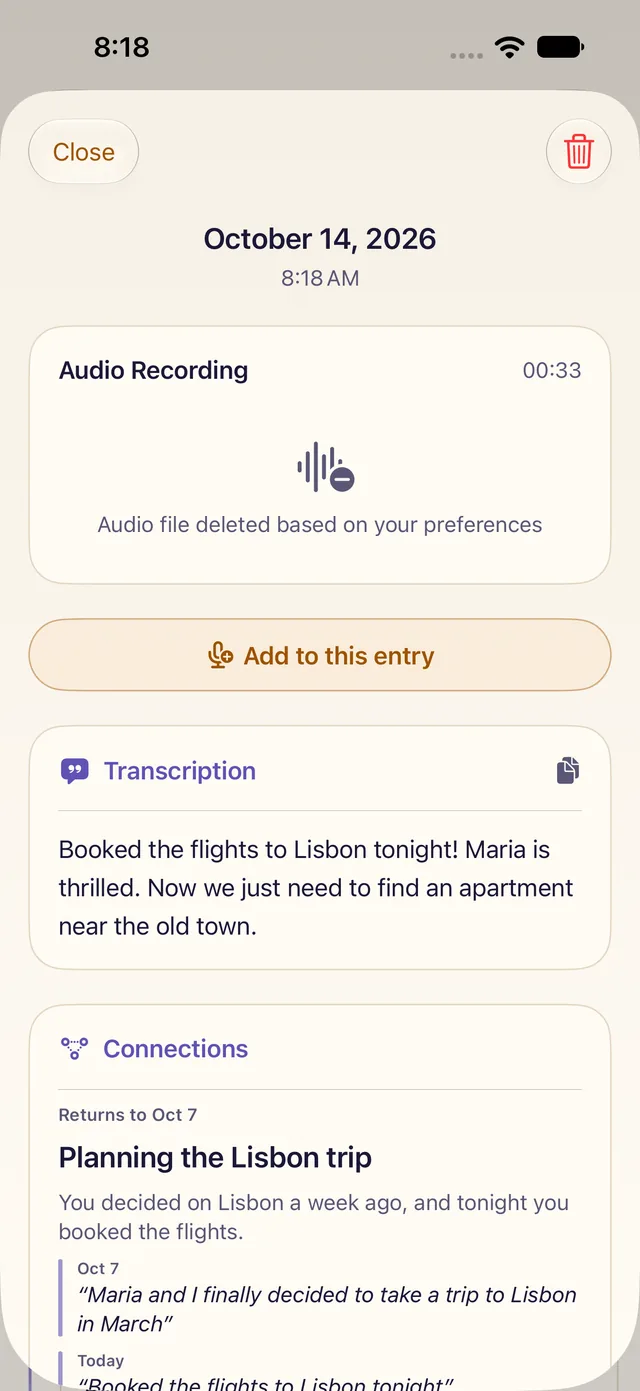
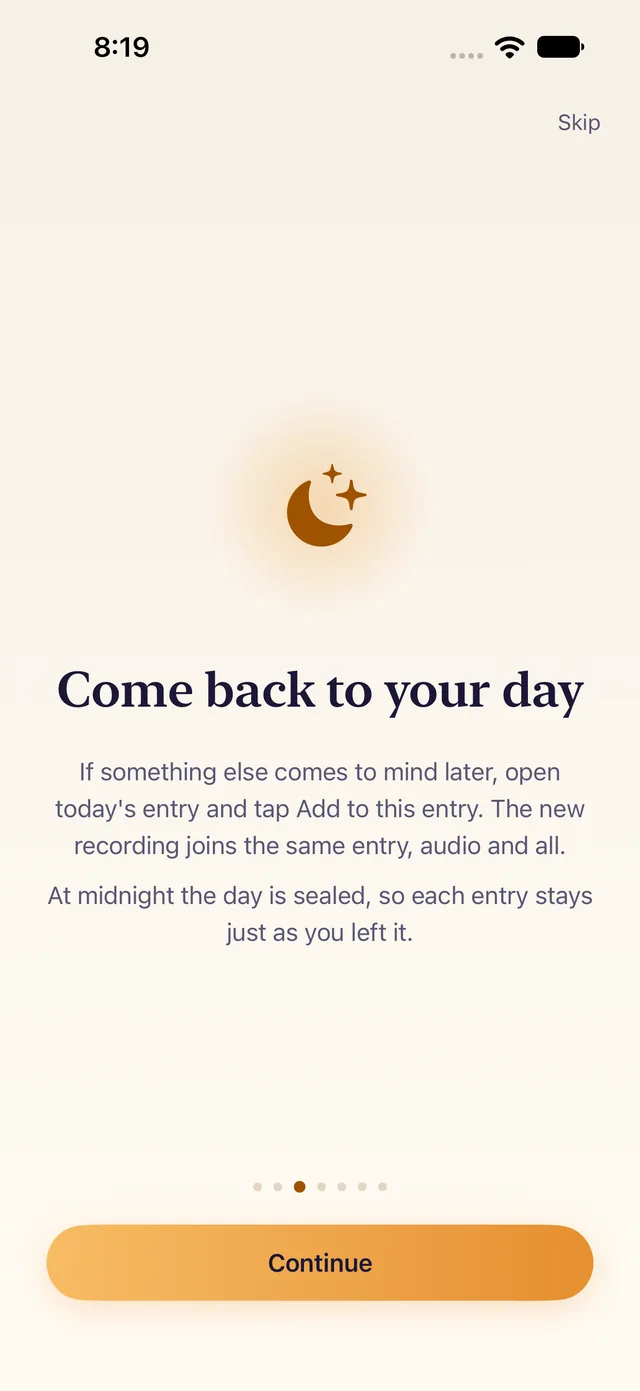
Add to today's entry
Come back to an entry any time that day and record more. It joins the same entry, transcript and audio. At midnight the day is sealed.
-
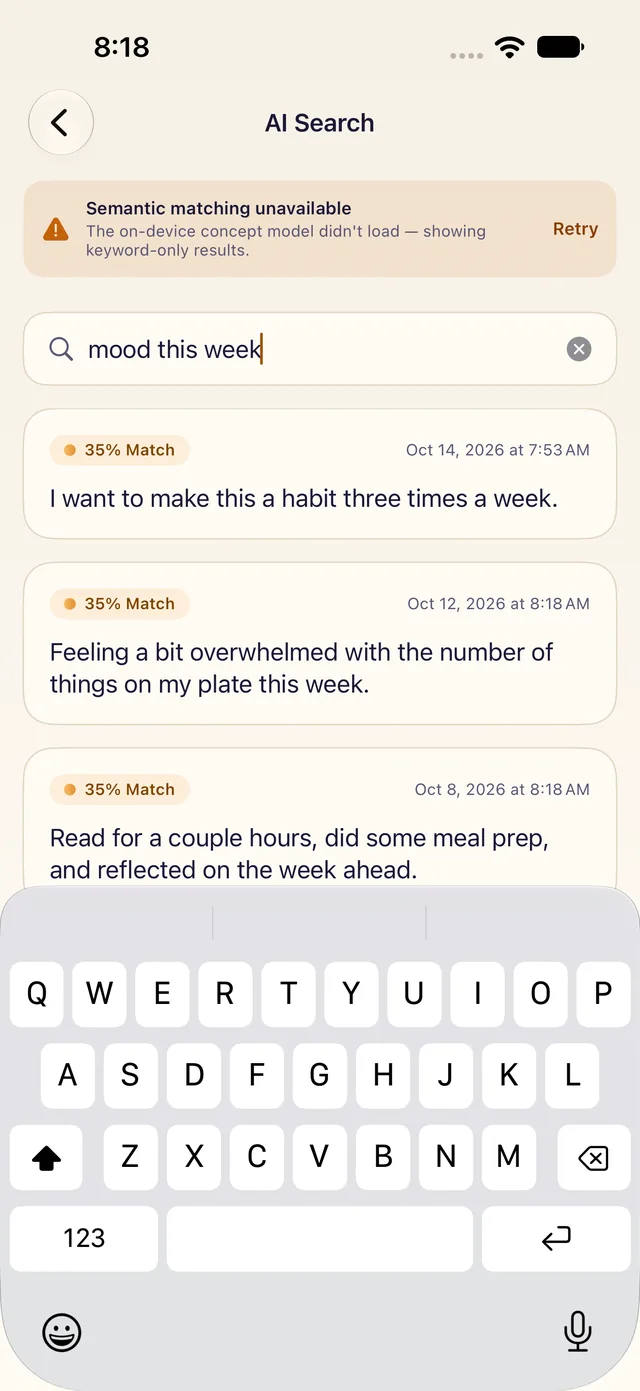
Search by meaning
Szeptem builds an on-device index of your entries, so you can search for a feeling or a topic, not just an exact word, and still find the right entry.
-
Echoes of earlier days
When you return to something you said before, Szeptem can quietly point back to it, quoting your own words from both days. Needs Apple Intelligence, and runs on the device.
-
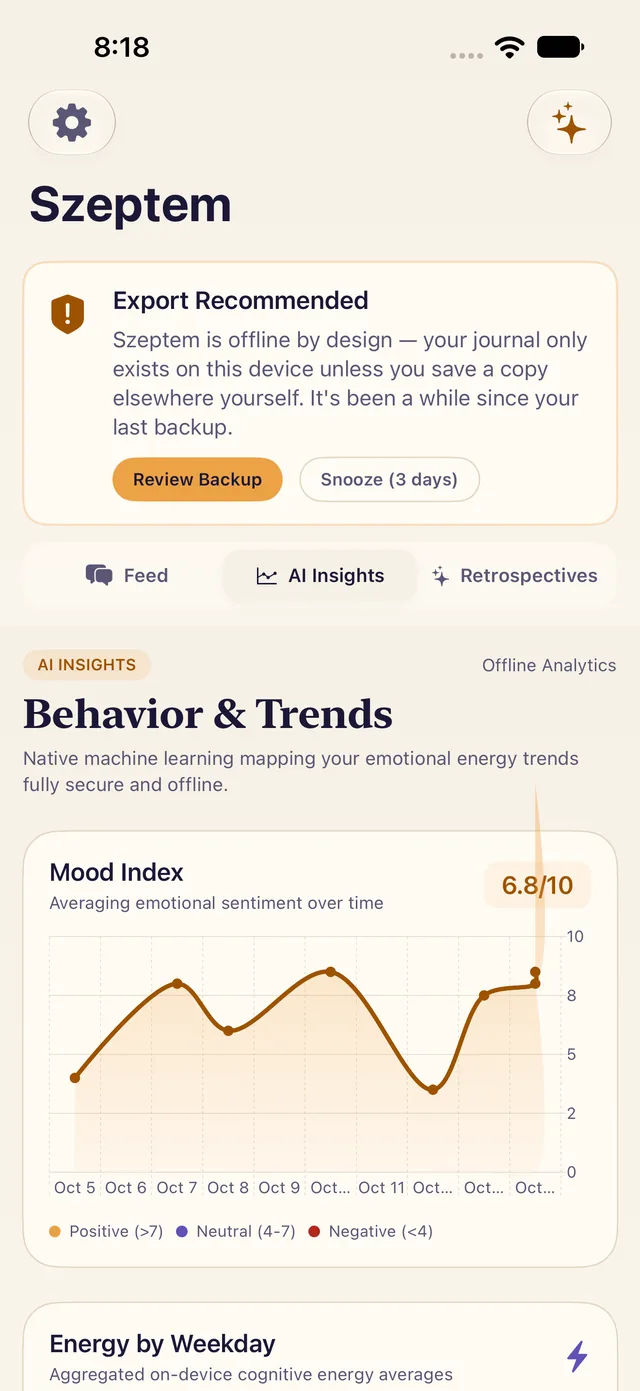
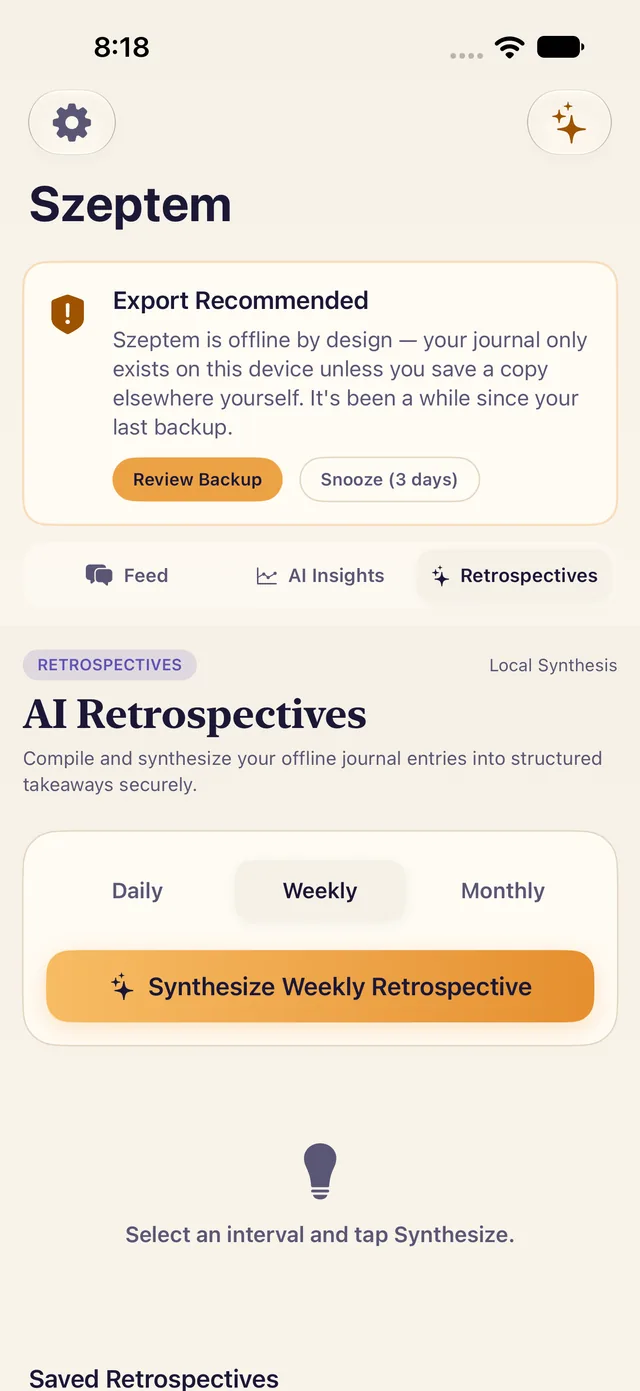
Mood insights and retrospectives
Each entry is analyzed on-device for mood, energy and sentiment. Over time you see trends, and retrospectives read everything you've said, including recordings added later.
-
Face ID lock
Optionally lock the app behind Face ID or your passcode, so your reflections stay private even if someone else picks up your phone.
-
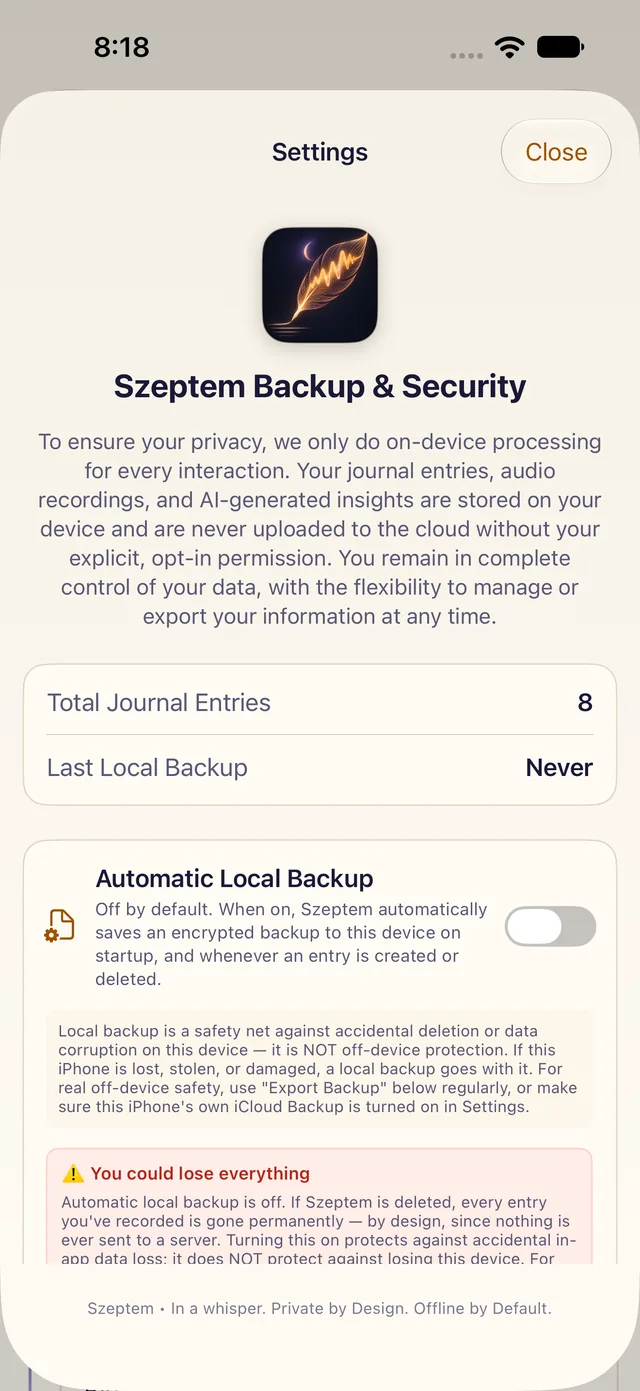
Encrypted backup, your way
Turn on automatic local backup, or export a backup whenever you like and save it anywhere: iCloud Drive, AirDrop, another app. Every backup is encrypted before it's written.
-
Restore anytime
Pick a backup file and Szeptem merges it back in without creating duplicate entries.
About your backups
Encrypted so only Szeptem can open them
Can you open a .szbackup file outside the app, or pull your entries out of it with a script? No, and that's deliberate. A backup of your journal should be useful to you and useless to anyone else who gets hold of the file.
-
Sealed with AES-256-GCM
Compressed, then encrypted
Every backup is compressed and then encrypted before it's written. Without the key, the file is unreadable.
-
The key isn't in the file
Keychain only
The 256-bit key lives in your device's iOS Keychain and travels only through iCloud Keychain. The app doesn't show or export it.
-
Why a script can't help
No key, no data
Reading the file format is easy. Getting the key isn't, by design: any way around it would also let in anyone who finds a leaked backup, whether from a shared Files folder, an iCloud Drive glitch or a stolen device backup.
-
Text, not audio
What's inside
Backups hold your entries' text and metadata. Audio recordings aren't included, only their file names.
-
Restore with Restore Backup
The supported way back
Szeptem's own Restore Backup has the key, decrypts the file, and merges your entries back in.
A closer look
The fine print
What Szeptem protects, and what it can't
Your voice recordings stay on your phone
Szeptem keeps your voice recordings deliberately out of reach. Each one is saved as an audio file inside the app's private sandbox (Application Support/VoiceRecordings), a location iOS never exposes through the Files app or over a USB connection. Backups contain only the text of each entry and the recording's file name, never the audio itself.
That means there's no way to export your recordings, and they exist only on the original device. If the phone is lost, wiped or replaced, the audio goes with it. If “Keep Voice Recordings” is turned off, the app deletes each recording as soon as it's transcribed, and deleting an entry always deletes its audio too.
If someone really wants your data
None of this is a defense against a determined, well-resourced adversary, and it isn't meant to be. The encryption and sandboxing protect against realistic threats: a backup file leaking from a shared folder, a cloud sync mishap, a lost or stolen device, or a curious person with a few minutes alone with your phone.
Governments and extremely well-funded corporations are a different class of opponent. They can buy or develop zero-day exploits and commercial spyware. They can pressure Apple or other service providers with subpoenas and court orders, and get at data through legal process, supply-chain access or insiders. They can bring forensic tools to a seized device, and they have the time and money to keep trying until something works. None of that requires breaking AES.
If an organization like that really wants your journal, it will most likely get it, and no app-level design changes that. The honest way to think about Szeptem's protections is that they raise the cost of casual and opportunistic access, not that they make your data untouchable.
The $5 wrench
The comic XKCD 538, “Security” makes this point well. In the first panel, a crypto nerd imagines an attacker building a million-dollar cluster to crack a laptop's 4096-bit RSA encryption, only to be defeated by the strength of the math. In the second panel, “actual reality” is a much simpler plan: drug the owner and hit them with a $5 wrench until they hand over the password.
The joke is that strong cryptography is rarely the weakest link. The people, the devices around it, and the legal and physical pressure that can be put on them are. That's also why there's no point trying to crack a Szeptem backup file. The encryption is built to hold against exactly that kind of attack, and anyone capable of getting around it wouldn't bother attacking the encryption in the first place.
Paid apps, just like the old days
Szeptem costs a nominal price ($1.99), and that's how it gets paid for, not with your journal. A diary is about as personal as data gets, which is exactly why it shouldn't come from a “free” app that has to make its money some other way. No accounts, no ads, no tracking SDKs. Recording, transcription, search, mood insights and the gentle echoes of earlier days all run entirely on your device. Nothing leaves it unless you export a backup yourself.